
Reliability is a Feature, Not a Guardrail.
Documenting the patterns, anti-patterns, and architectural decisions that keep complex platforms alive.
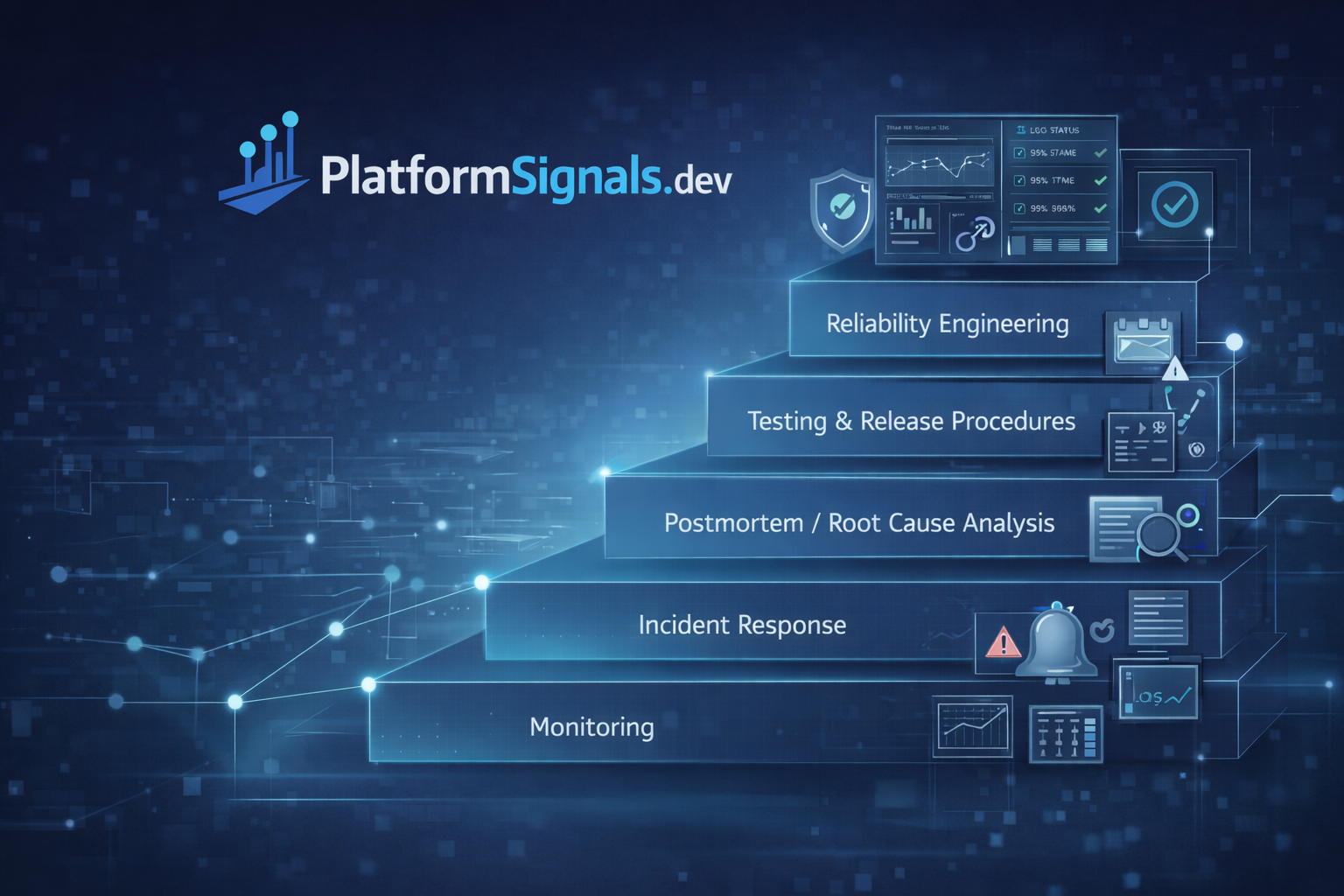
Service Level Objectives (SLOs) & Indicators (SLIs)
Understanding and defining what “good enough” means for your systems using measurable indicators and user-centric goals.
Error Budgets
Balancing innovation and reliability by quantifying how much failure is acceptable — and when to slow down to maintain trust.
Toil vs Automation
Eliminating repetitive manual work to free up time for engineering — because scaling humans doesn’t scale systems.
Monitoring & Observability
Going beyond dashboards. Tracing, logs, metrics — building the capability to ask new questions, not just track old ones.
Incident Response & Management
Structured, blameless, and fast. Build muscle memory for handling failure — with calm, not chaos.
Postmortems & Root Cause Analysis
Digging into the “why” after incidents without blame. Capturing institutional knowledge to improve over time.
Change Management & Release Engineering
Ship fast, ship safely. Practices like canary deploys, feature flags, and staged rollouts protect reliability in motion.
I go by The Silent Node — a quiet observer of noisy systems.
This blog is where I document the patterns, anti-patterns, and architectural decisions that keep complex platforms alive. I write from the trenches of software reliability, where uptime is earned, not assumed, and where postmortems tell better stories than dashboards.
I believe that reliability is a feature, not a guardrail, and that operational wisdom belongs in the open.
No job titles. No name drops. Just signals.
The Silent Node